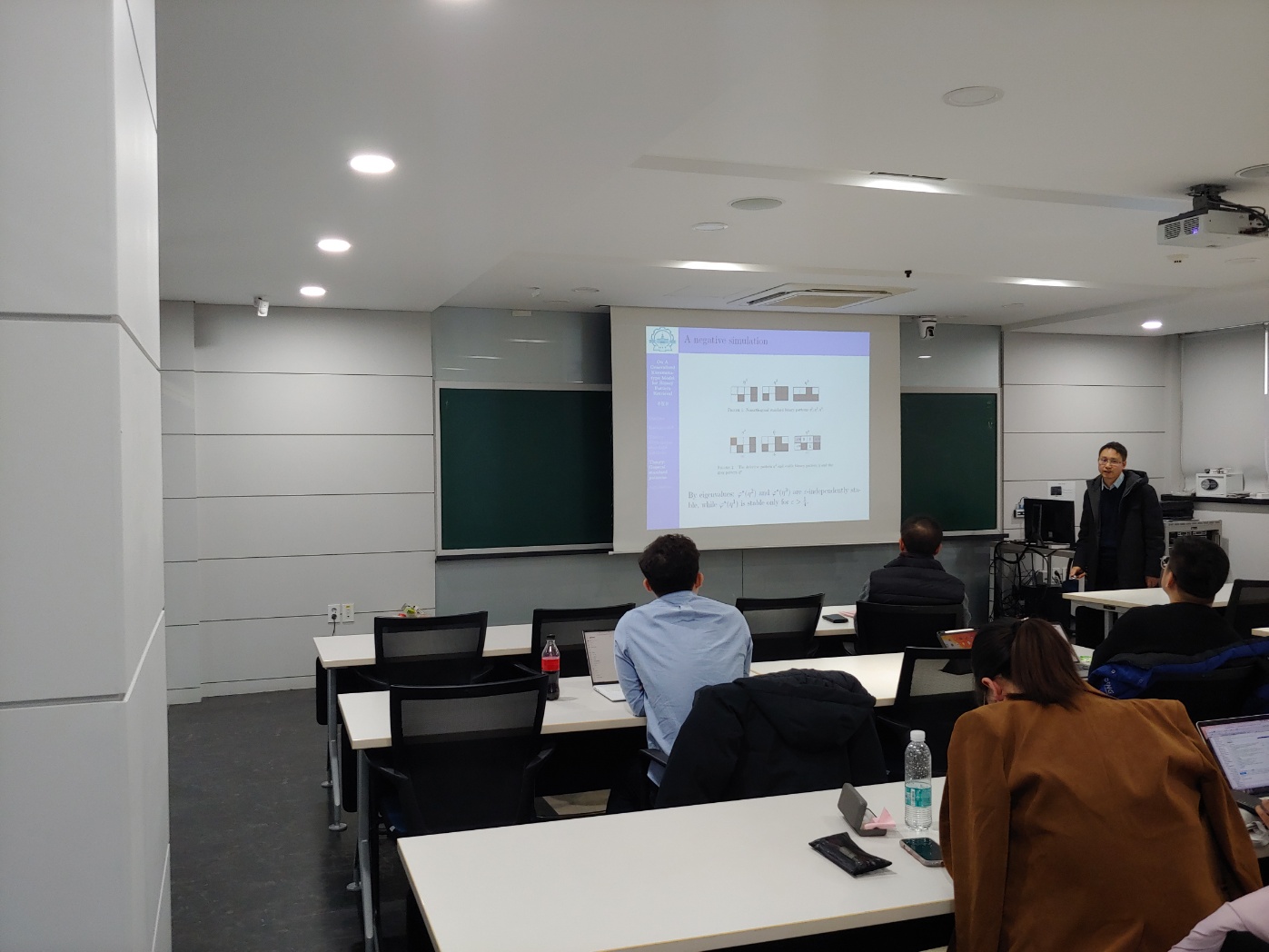
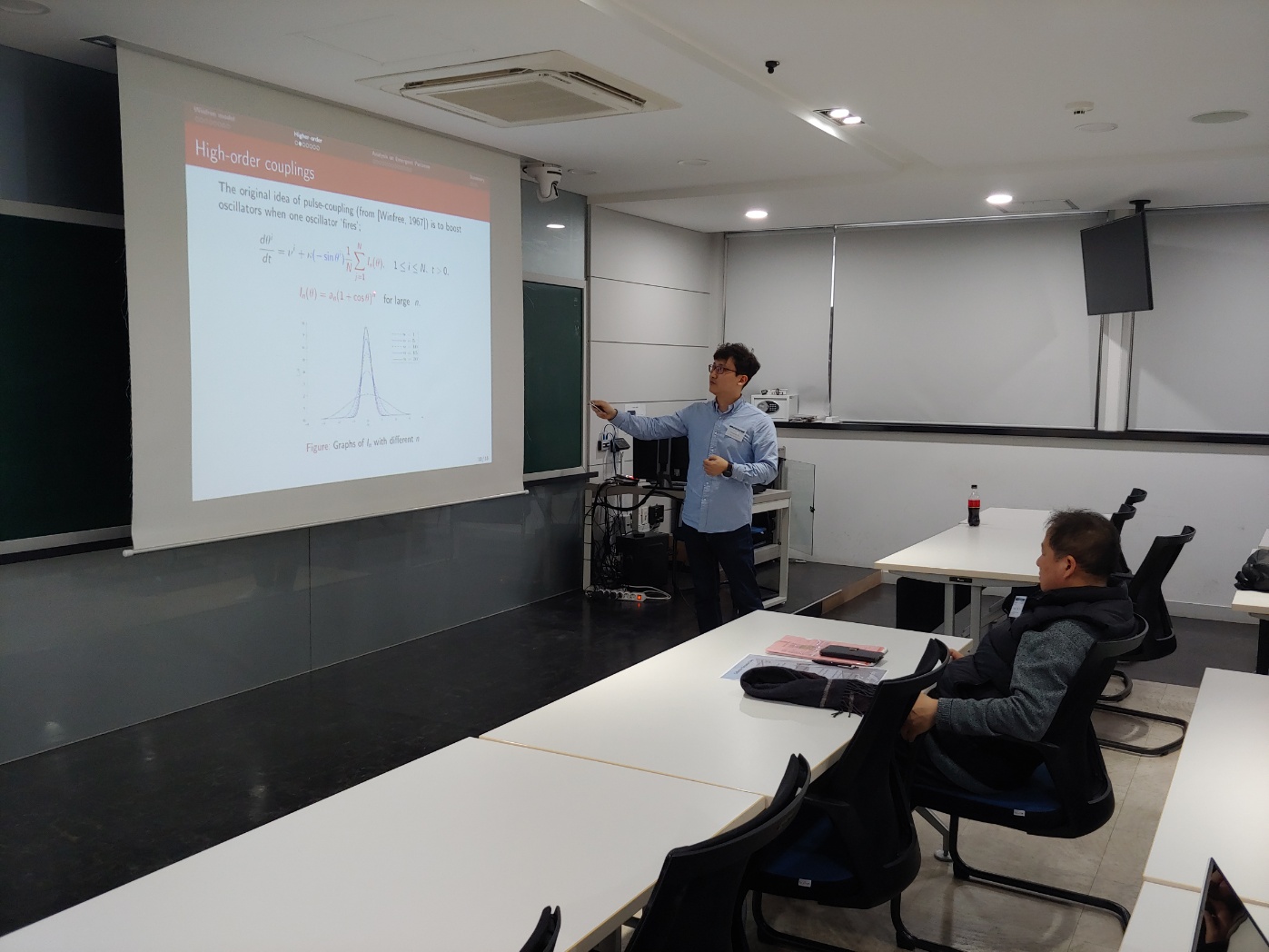
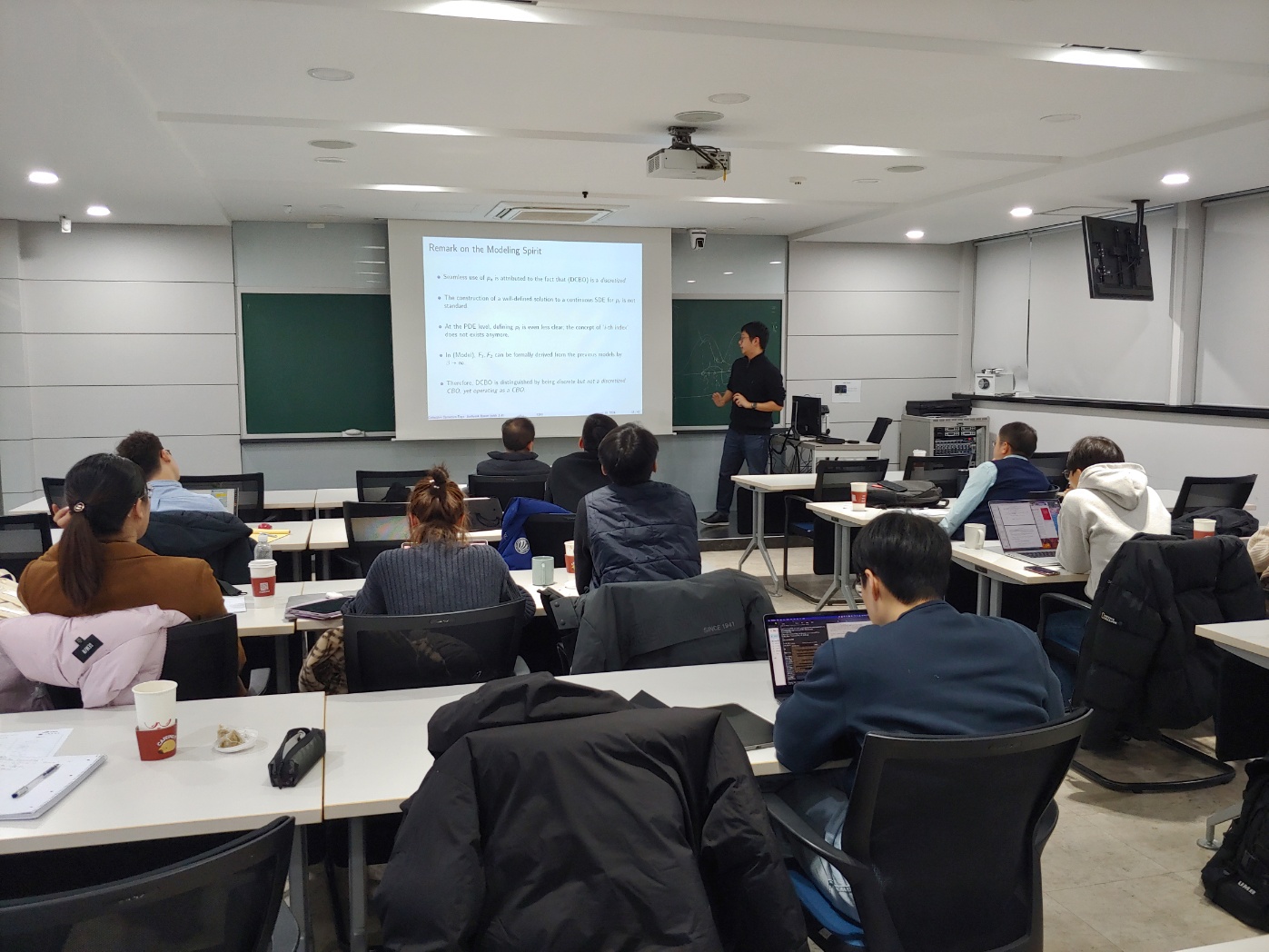
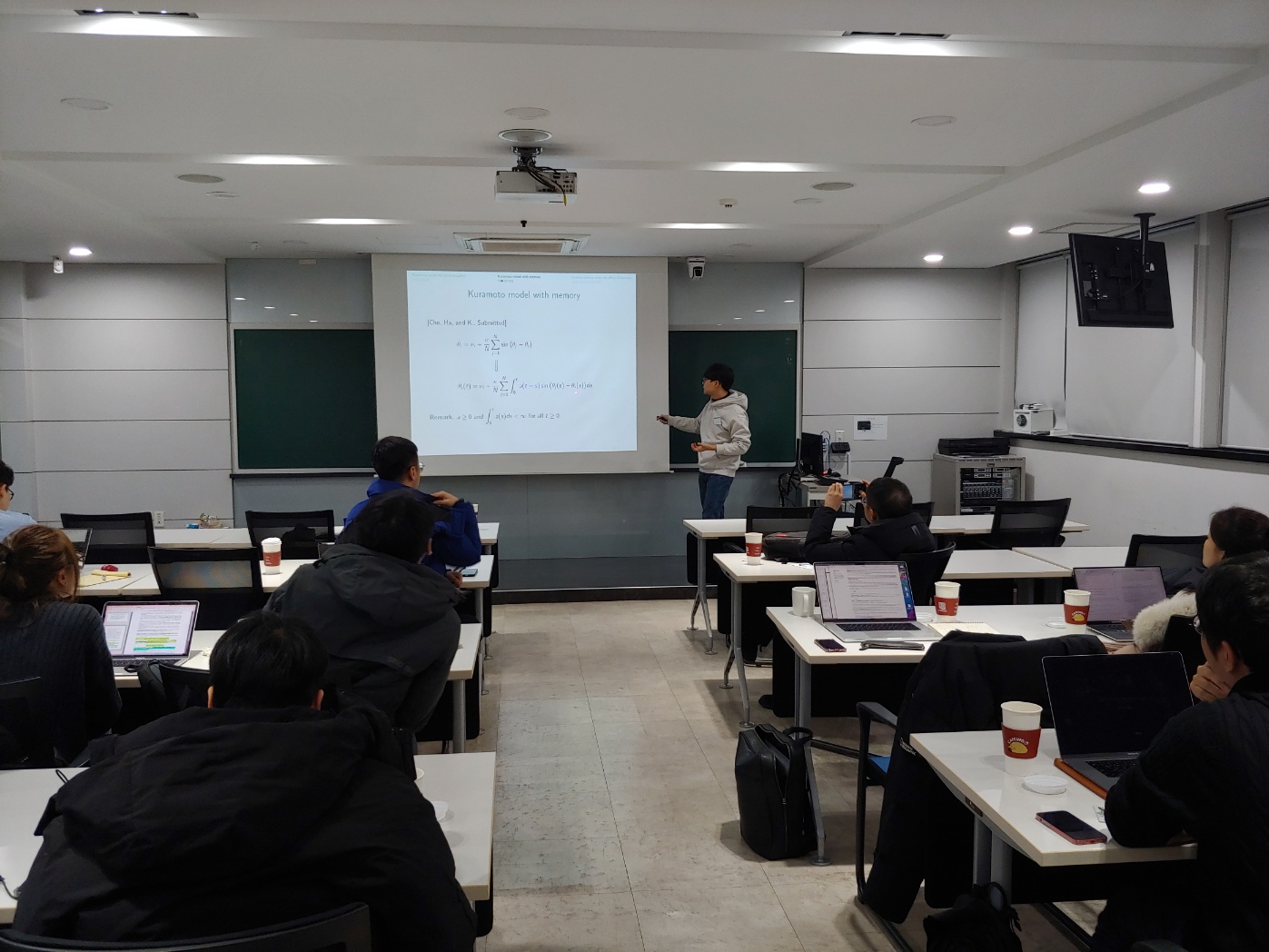
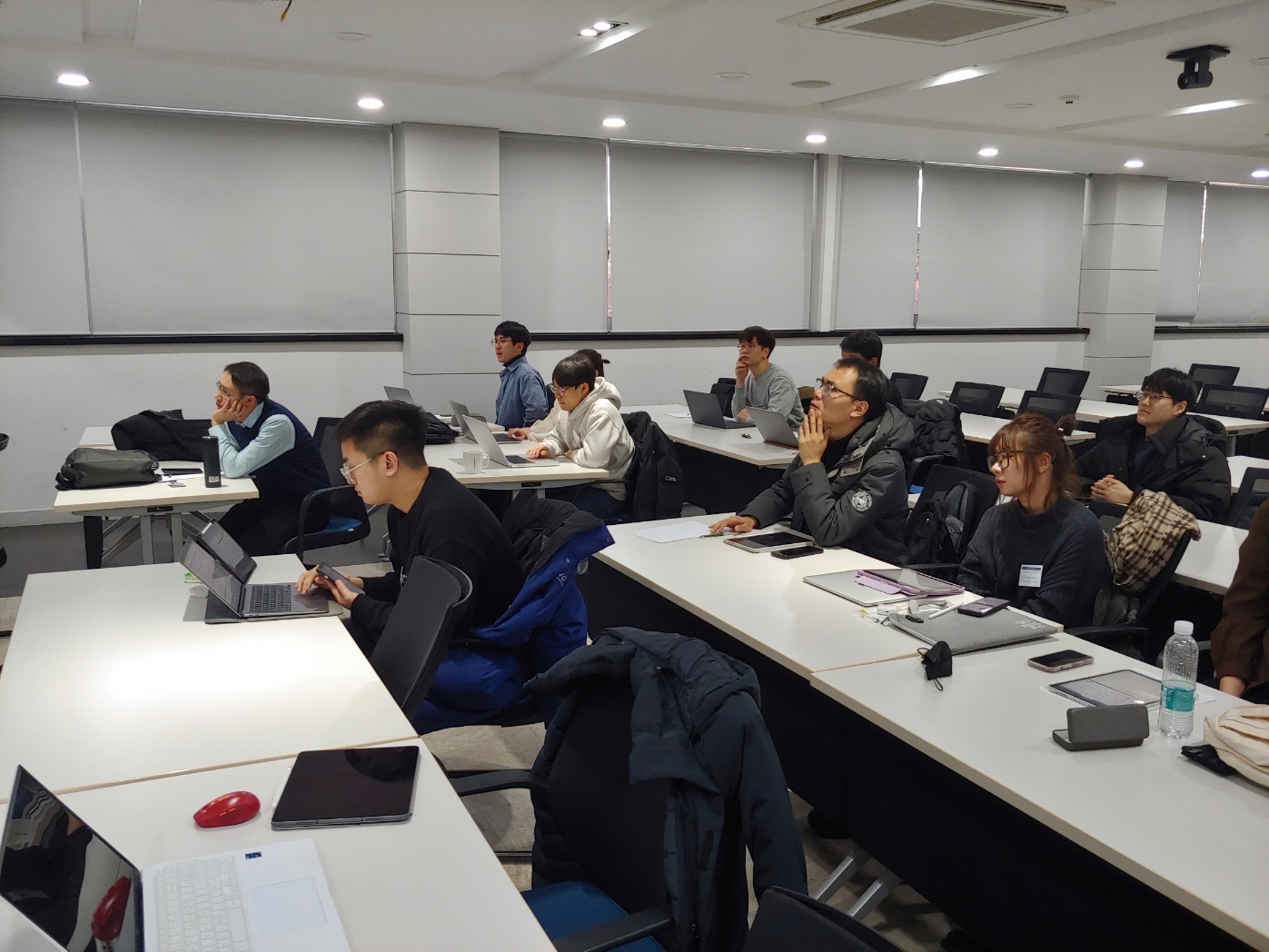
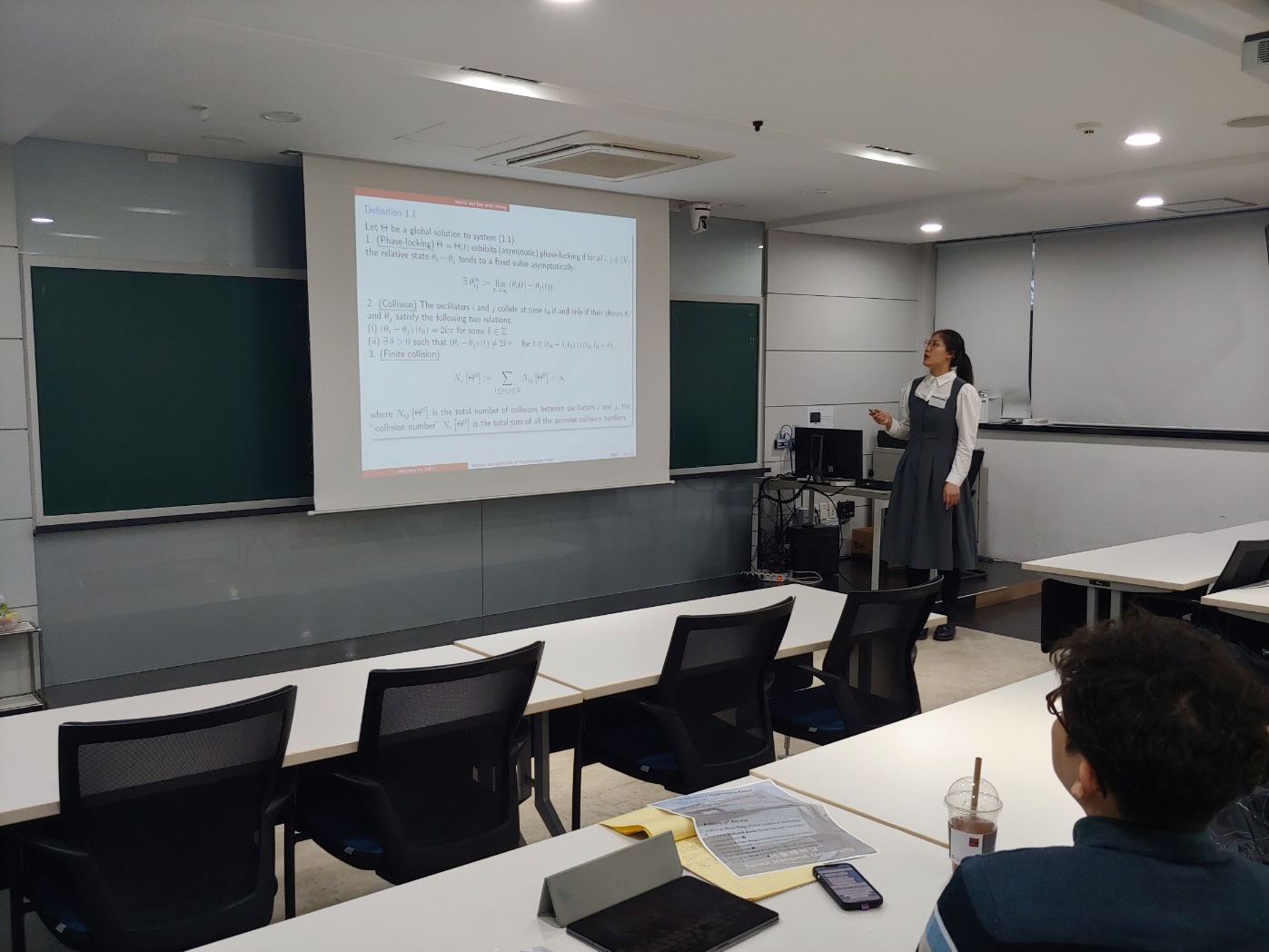
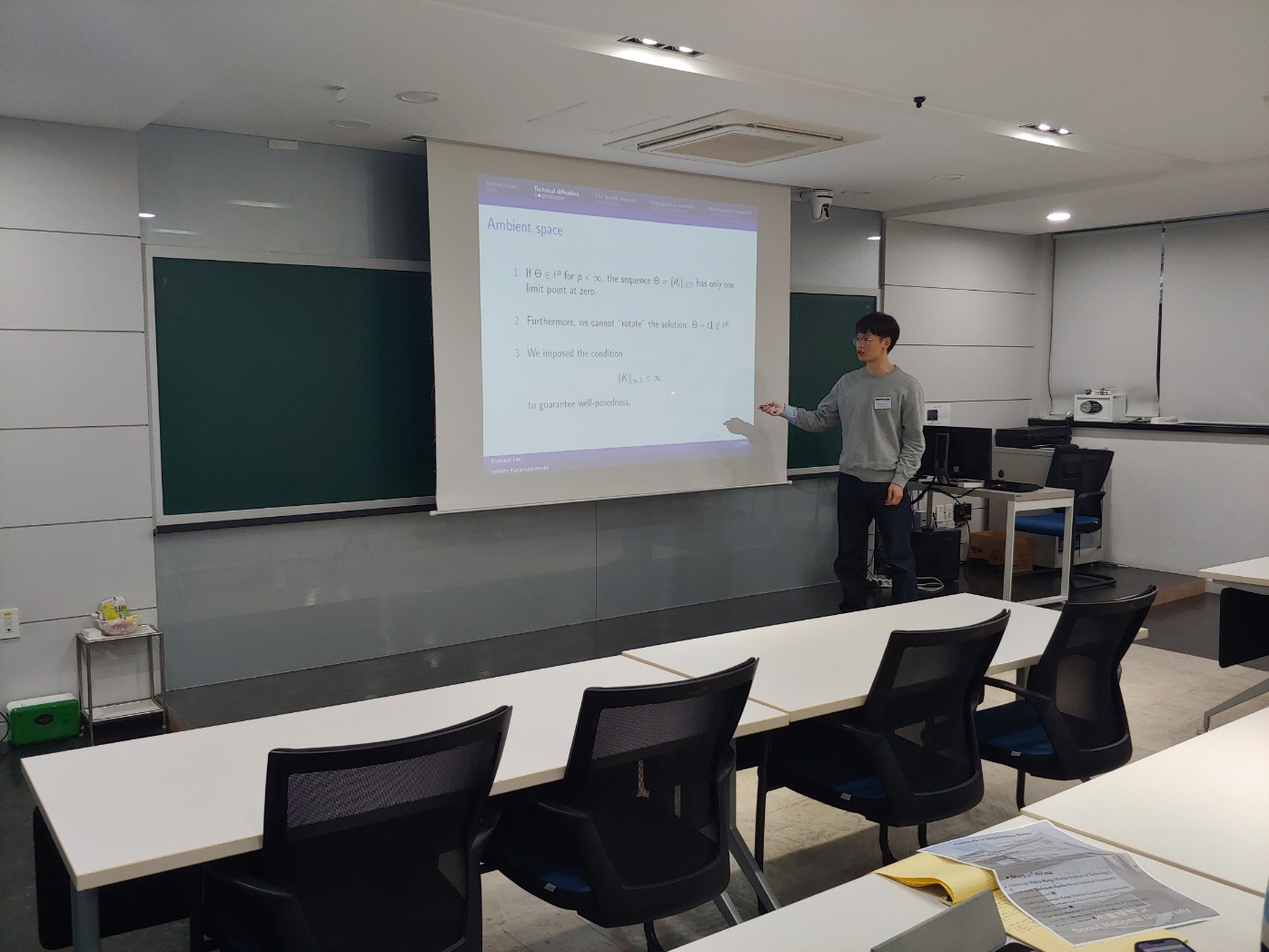
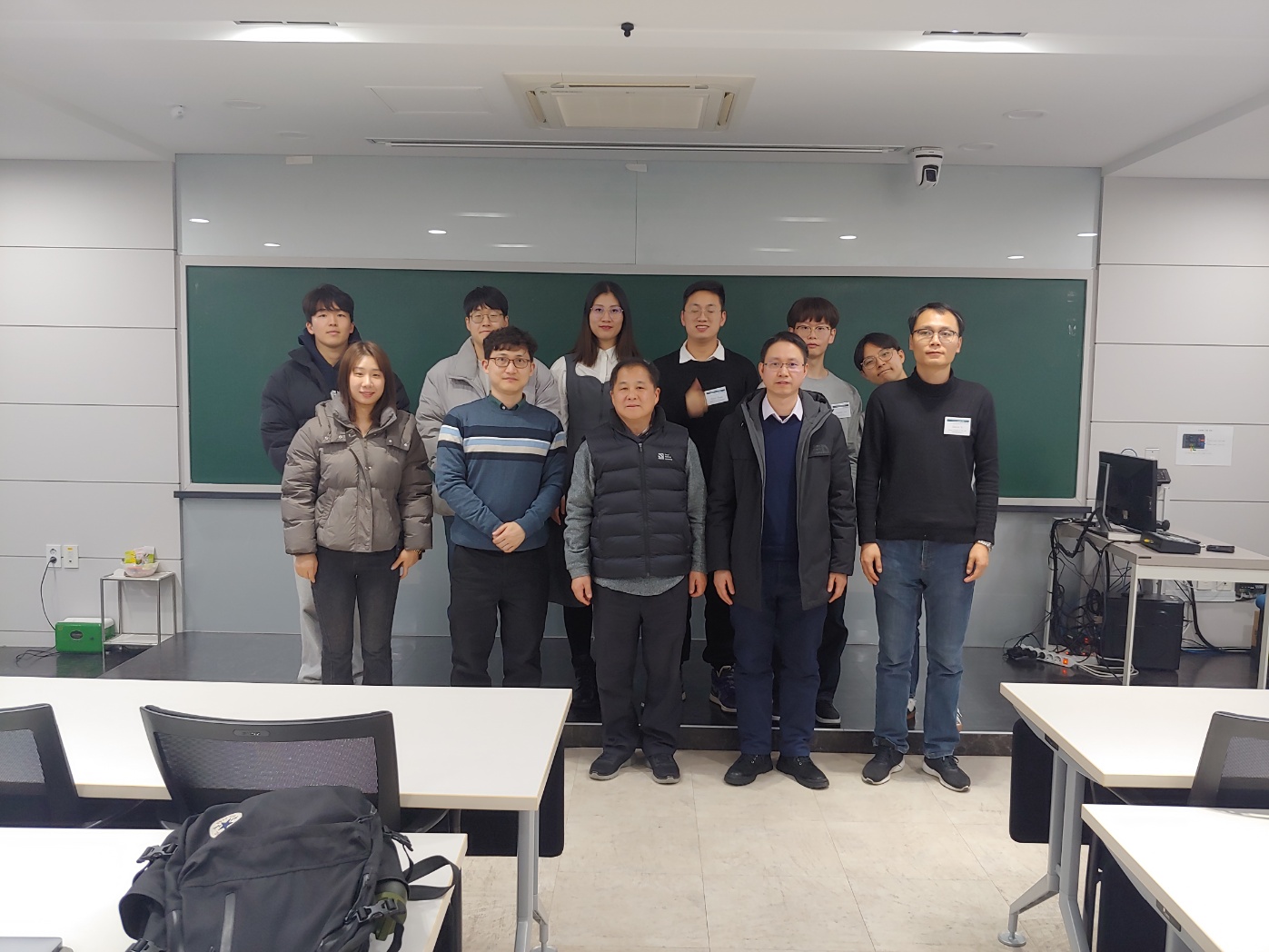
We continued and ended Collective Dynamics Days on 12th January 2024. Thanks for everyone of their interest in the Workshop!
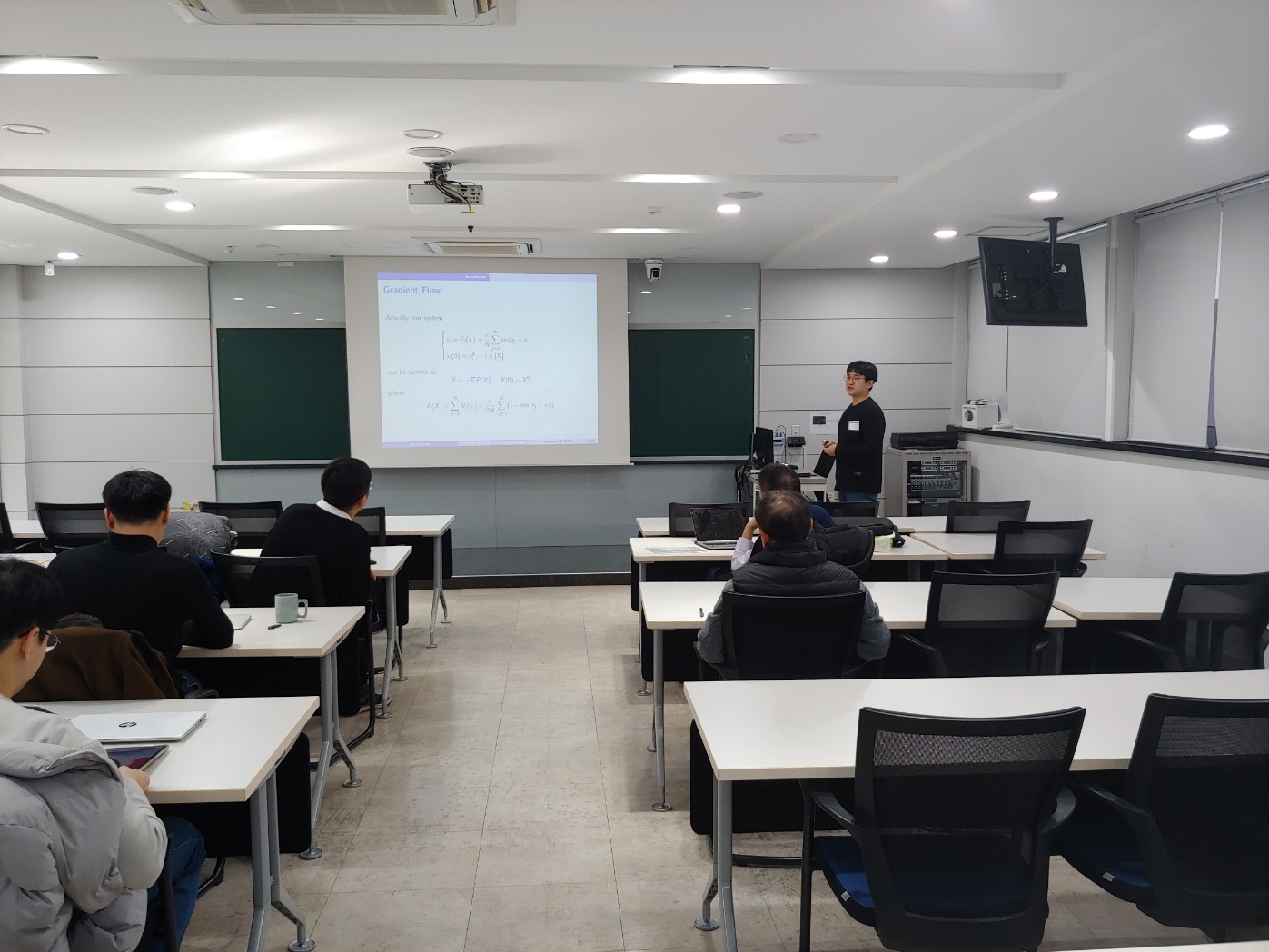
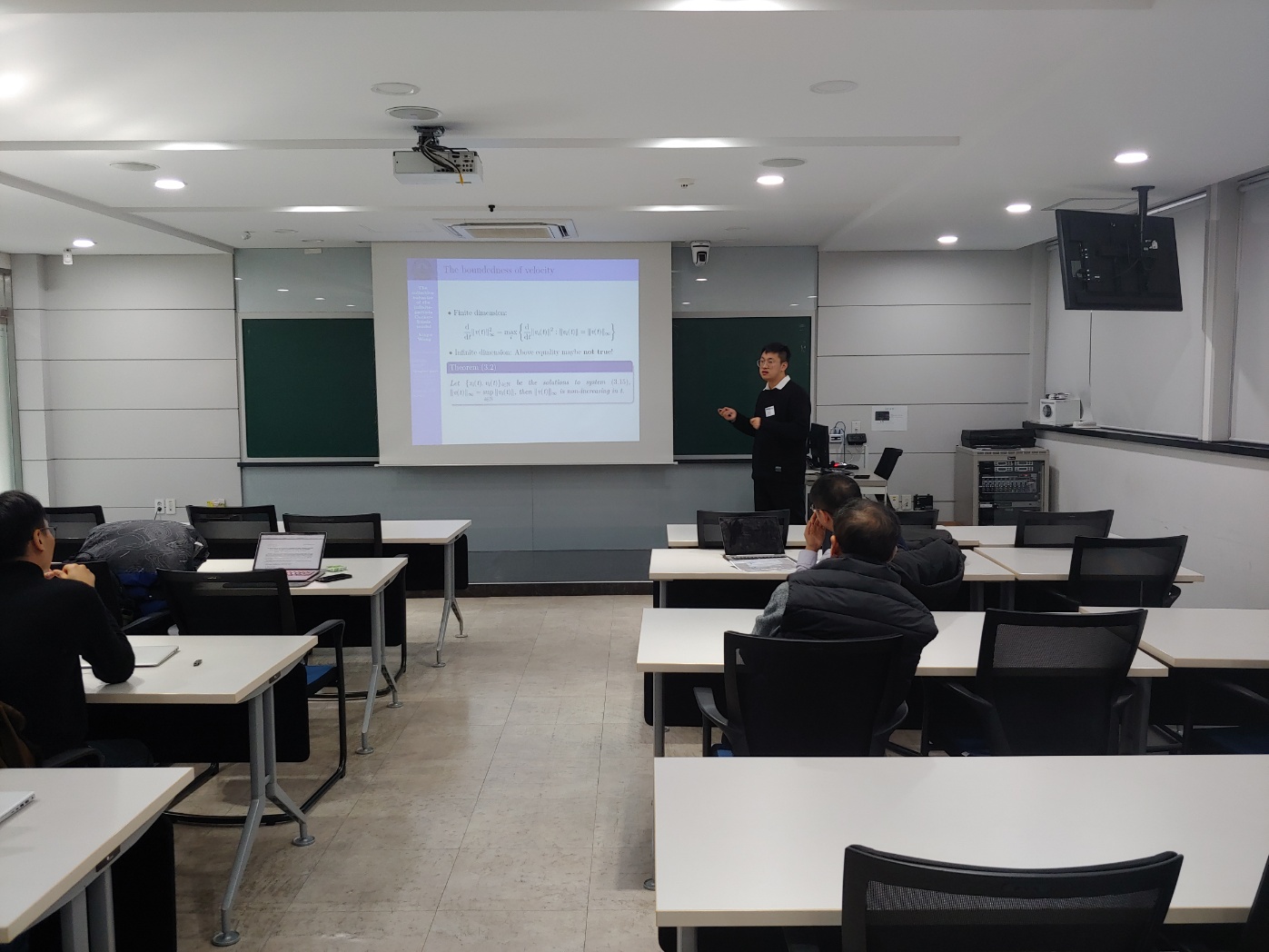

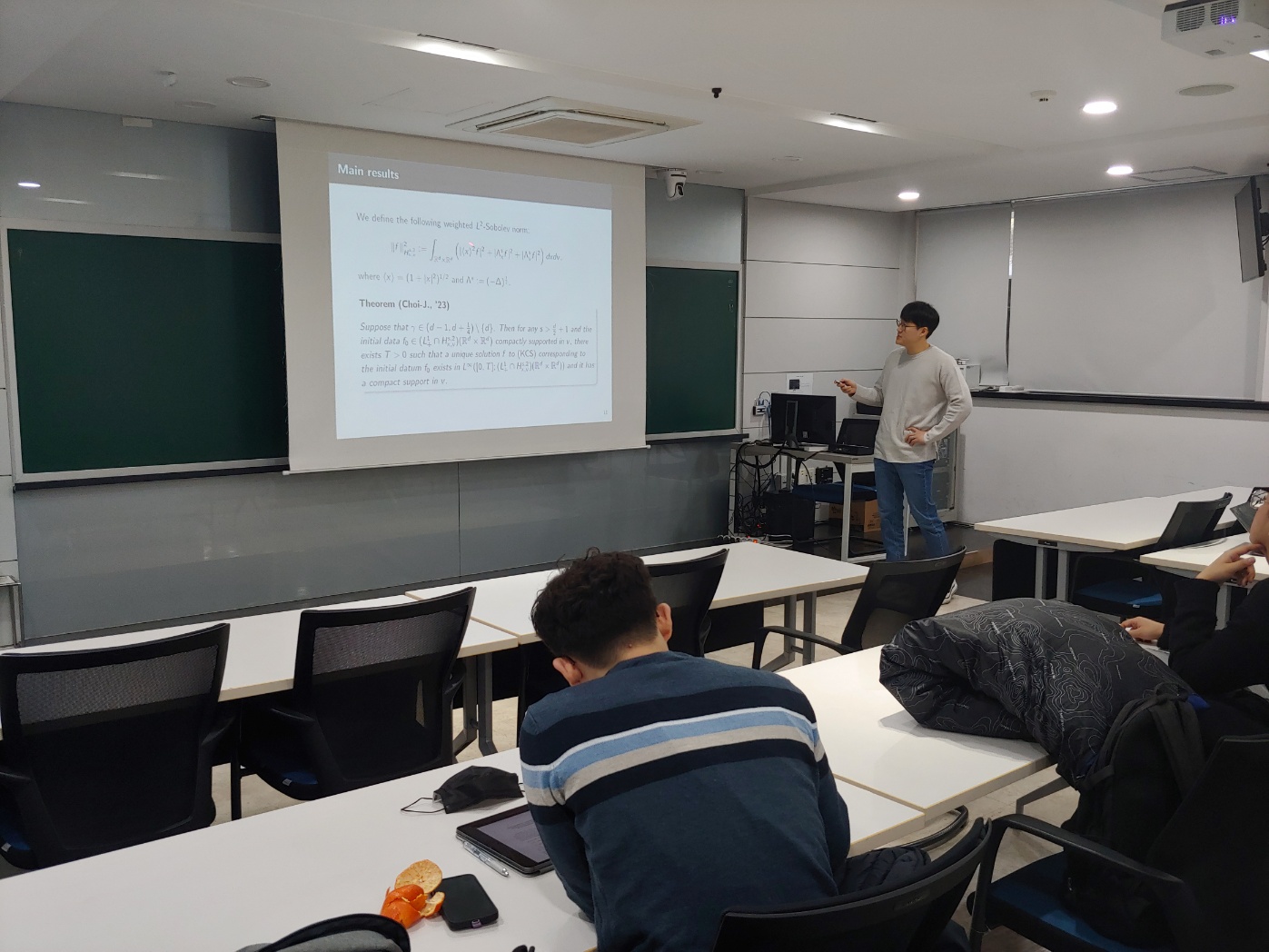
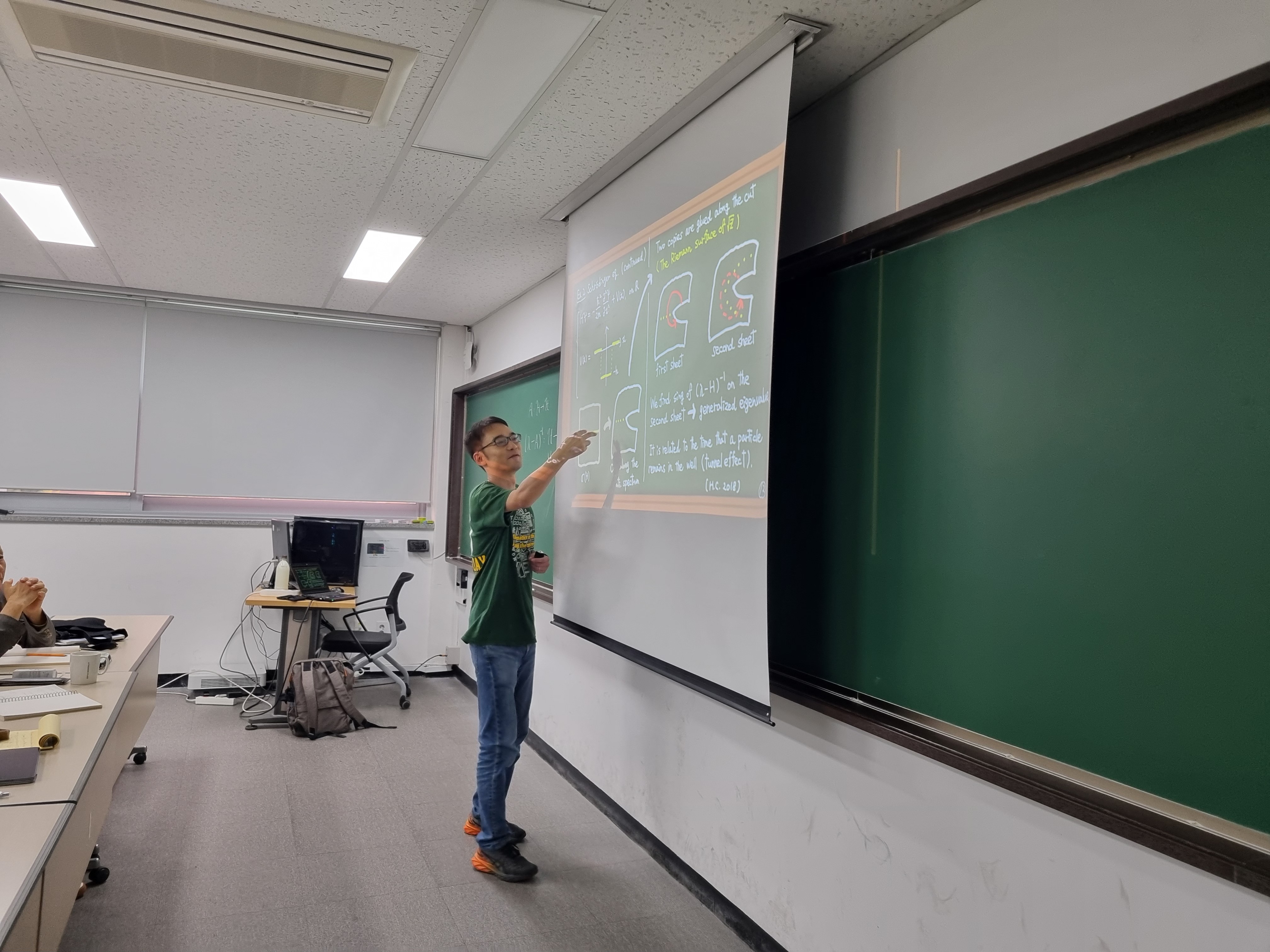
Prof. Hayato Chiba, from Tohoku University, visits HYKE 10th~21th October. On 13th October, he gave us three lectures as follows:
Date & Time : 9:00 ~ 12:00, 13th October.
Location : 27-325
Lecture 1 : Bifurcation of the Kuramoto model on networks PDF
Lecture 2 : The generalized spectrum theory and its applications PDF
Lecture 3 : Dynamics of neuronal brain wave on a random graph PDF



Prof. Young-Heon Kim, from University of British Columbia, visited HYKE on 10th October. He gave us an interesting talk about his overall research, especially “optimal transport”.
The presentation file can be found in PDF
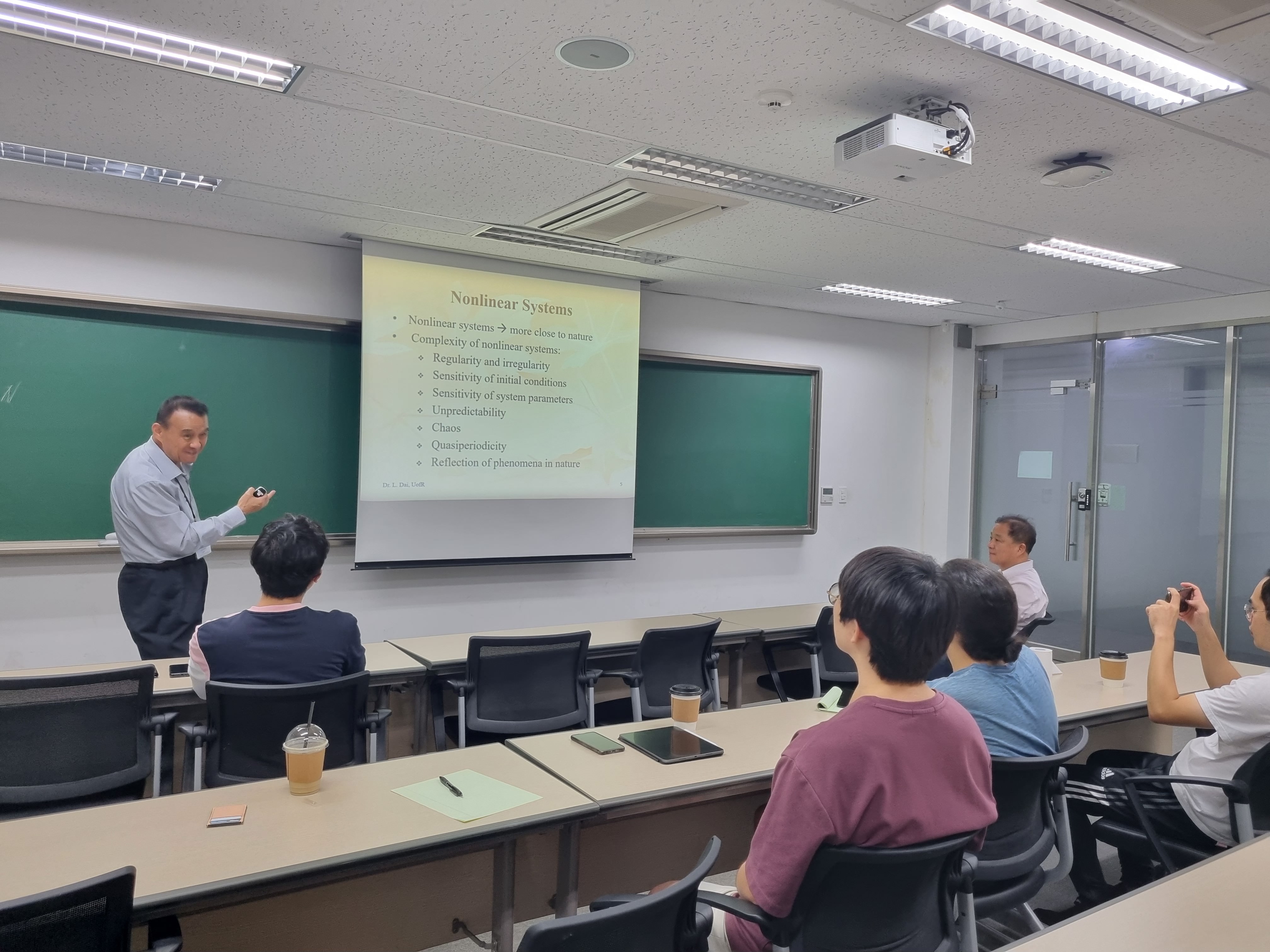
Prof.Liming Dai visited HYKE on 17th August. We had lunch and the nice seminar in SNU. The presentation file can be found in PDF


There will be an invited talk.
Title: Interfaces between Kinetic Models of Collective Phenomena and Data Science
Speaker: Mattia Zanella (Department of Math, The University of Pavia)
Time: 2023 January 13th(Fri.), 10:00 ~ 12:00
Place: 27-325
Abstract:
Kinetic equations play a leading role in the modelling of large systems of interacting particles/agents with a recognized e ectiveness in describing real world phenomena ranging from plasma physics to multi-agent dynamics. The derivation of these models has often to deal with physical, or even social, forces that are deduced empirically and of which we have limited information [4, 5]. Hence, to produce realistic descriptions of the underlying systems it is of paramount importance to manage e ciently the propagation of uncertain quantities across scales. In this course, we concentrate on the interplay of this class of models with collective phenomena in life and social sciences, where the assessment of uncertainties in data assim- ilation is crucial to design e cient interventions [2, 7, 8]. Furthermore, we present several classes of numerical methods for kinetic models with uncertainties, see [3] and the references therein. Finally, we discuss the construction of novel schemes that are capable of achieving high accuracy in the random space without losing nonnegativity of the solution [1, 6].
[1] J. A. Carrillo, L. Pareschi, M. Zanella. Particle based gPC methods for mean- eld models of swarming with uncertainty. Commun. Comput. Phys., 25(2): 508-531, 2019.
[2] G. Dimarco, B. Perthame, G. Toscani, M. Zanella. Kinetic models for epidemic dynamics with social heterogeneity. J. Math. Biol., 83, 4, 2021.
[3] S. Jin, L. Pareschi. Uncertainty Quanti cation for Hyperbolic and Kinetic Equations, SEMA-SIMAI Springer Series, vol. 14, 2017.
[4] A. Medaglia, G. Colelli, L. Farina, A. Bacila, P. Bini, E. Marchioni, S. Figini, A. Pichiecchio, M. Zanella. Uncertainty quanti cation and control of kinetic models of tumour growth under clinical uncertainties. Int. J. Non-Linear Mech., 141:103933, 2022.
[5] A. Medaglia, L. Pareschi, M. Zanella. Stochastic Galerkin particle methods for kinetic equations of plasmas with uncertainties. Preprint arXiv:2208.00692, 2022.
[6] L. Pareschi, M. Zanella. Monte Carlo stochastic Galerkin methods for the Boltzmann equation with uncertainties: space-homogeneous case. J. Comput. Phys., 423:109822, 2020.
[7] A. Tosin, M. Zanella. Uncertainty damping in kinetic tra c models by driver-assist controls. Math. Contr. Relat. Fields, 11(3): 681-713, 2021.
[8] M. Zanella, C. Bardelli, G. Dimarco, S. Deandrea, P. Perotti, M. Azzi, S. Figini, G. Toscani. A data- driven epidemic model with social structure for understanding the COVID-19 infection on a heavily a ected Italian Province. Math. Mod. Meth. Appl. Scie., 31(12):2533-2570, 2021.